
Call us now :07971406055
 Send Inquiry
 Send Inquiry
APFC Panels
MOQ : 01 Piece
APFC Panels Specification
- Cooling
- Natural Air / Forced Air Cooling as required
- Indication
- LED indication for status and faults
- Panel Type
- Compartmentalized, Floor mounted
- Mounting Type
- Floor Mounted
- Operating Voltage
- 415V AC 10%, 3 Phase
- Controller Type
- Microprocessor based APFC relay with step switching
- Display
- Digital LCD/LED Display (Power Factor, Voltage, Current)
- Bus Bar Material
- Electrolytic Grade Aluminium / Copper
- Switching Device
- MCB / MCCB / Contactor based
- Capacitor Type
- Heavy Duty, APP / MPP
- Enclosure Protection
- IP42 / IP54
APFC Panels Trade Information
- Minimum Order Quantity
- 01 Piece
- Supply Ability
- 10 Pieces Per Day
- Delivery Time
- 2 Days
About APFC Panels
Our company counted among the most prominent trader and supplier of APFC Panels in India. These are made at our vendor's advanced manufacturing unit using optimum quality raw and latest machinery in synchronization with defined industrial norms. These are available to our valuable customer at a market reasonable price. This APFC Panels is made by using iron material which makes it corrosion resistant. These are well known for its durability.Superior Engineering for Reliable Performance
Our APFC panels are meticulously designed with electroplated copper or aluminum bus bars and robust compartmentalized steel enclosures for enhanced longevity and safety. The implementation of microprocessor-based relays ensures precise and automatic regulation of power factorproviding consistent energy efficiency and minimizing utility penalty charges.
Flexible Solutions Tailored to Your Needs
Adapt the panel specifications to your site requirements with flexible dimensions, enclosure ratings, and material choices. Our solutions cater to a wide range of industrial and commercial facilities, offering protection grades up to IP54 and power ratings up to 5000 kVAR to meet varying scales of electrical demand and environmental conditions.
FAQs of APFC Panels:
Q: How does the APFC panel automatically regulate power factor in industrial applications?
A: The APFC panel uses a microprocessor-based relay to continuously monitor the system power factor. It automatically switches capacitor banks in and out of the circuit via contactors or breakers, maintaining the optimal power factor and reducing losses without manual intervention.Q: What advantages do heavy-duty APP/MPP capacitors offer in these panels?
A: Heavy-duty APP/MPP capacitors are highly durable, ensuring stable performance even under fluctuating load conditions. Their robust design extends the lifespan of the APFC panel and reduces the risk of premature failure, thereby providing reliable long-term operation for your facility.Q: When should an APFC panel be installed in a facility?
A: An APFC panel should be installed whenever a site regularly experiences low power factor due to inductive loads, such as motors and transformers. Early installation helps in maintaining compliance with electricity boards, avoiding penalties, and optimizing power use.Q: Where can these APFC panels be used effectively?
A: These APFC panels are ideal for deployment in industries, commercial buildings, and any facilities with significant inductive loads. They are suitable for installation both indoors and in environments requiring up to IP54 enclosure protection.Q: What is the process for configuring an APFC panel for a new installation?
A: Panel configuration starts with assessing your total load, required power factor improvement, and site conditions. Based on these parameters, the number and rating of capacitor steps, controller type, cooling method, and enclosure level are selected for optimal performance.Q: How does the digital display contribute to panel operation and maintenance?
A: The digital LCD/LED display provides real-time monitoring of power factor, voltage, and current. This enables operators to quickly detect anomalies, assess panel performance, and execute timely maintenance, increasing both safety and electrical efficiency.Q: What are the main benefits of using a microprocessor-based APFC relay over traditional methods?
A: Microprocessor-based relays offer precise and automatic step switching, faster response to load changes, and enhanced measurement accuracy. This leads to better energy savings, minimal manual intervention, and greater system reliability compared to conventional systems.
Tell us about your requirement

Price:
Quantity
Select Unit
- 50
- 100
- 200
- 250
- 500
- 1000+
Additional detail
Mobile number
Email

More Products in Electrical Control Panels Category
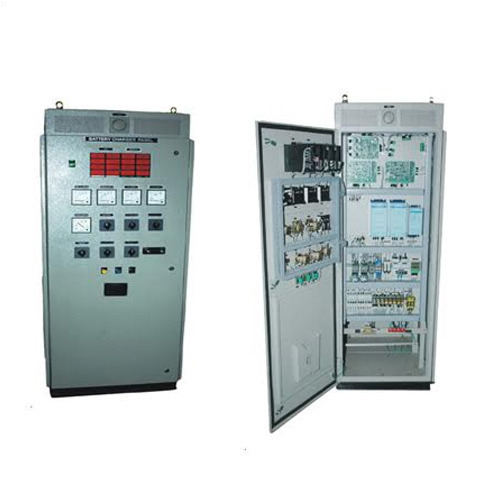
Battery Charger Panel
Price 10000 INR
Minimum Order Quantity : 01 Piece
Protection Level : Other, IP42, Other, IP42
Connectivity Type : Wired
Cabinet Material : Powder Coated Mild Steel
Rated Insulation Voltage : 690V
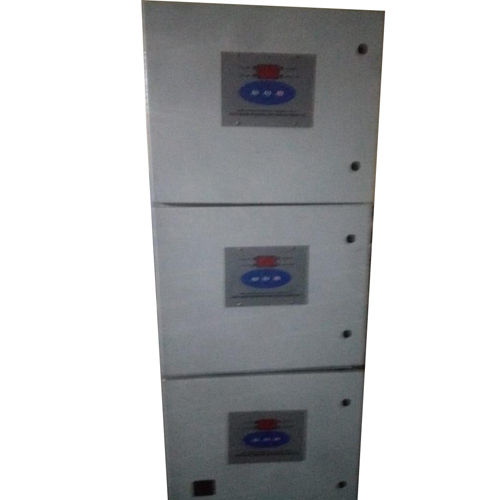
Electrical Marshalling Kiosks
Price 50000.00 INR
Minimum Order Quantity : 1 Piece
Protection Level : Other, Weather & Dust Proof, Other, Weatherproof / Dust Proof
Connectivity Type : Cable Entry (Top/Bottom)
Cabinet Material : Mild Steel / Stainless Steel
Rated Insulation Voltage : 690 V
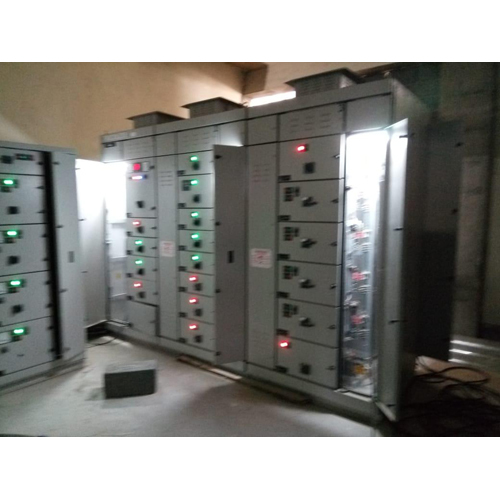
Motor Control Centre
Price 50000.00 INR
Minimum Order Quantity : 1 Piece
Protection Level : Other, IP42 / IP54, IP54
Connectivity Type : Wired
Cabinet Material : Sheet Steel MS (CRCA)
Rated Insulation Voltage : 690 V AC
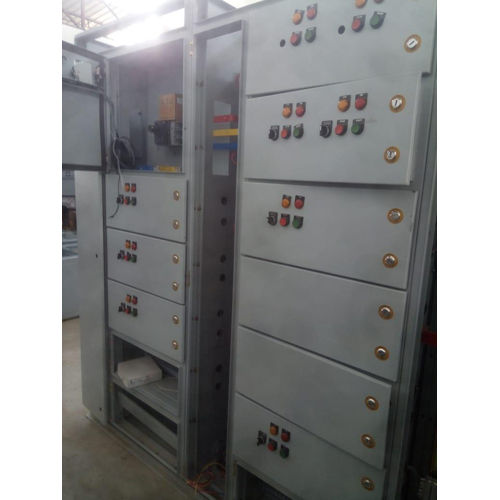
Capacitor Panel
Price 50000.00 INR
Minimum Order Quantity : 1 Piece
Protection Level : Other, IP42 / IP54, Other, Overload, Short Circuit
Connectivity Type : Panel Mounted
Cabinet Material : Mild Steel
Rated Insulation Voltage : 690V

"We are dealing in North India Only."
 Send Inquiry
Our Products

Plot No. 1, Brahmpuri Phase-1, Ranhola, Nangloi, Near Petrol Pump, New Delhi - 110041, India

Mr Mohd Jawed Nehal
(Director)
Mobile :07971406055
 Send Inquiry
 Send SMS
Developed and Managed by Infocom Network Private Limited.
